
Brass: Lancashire
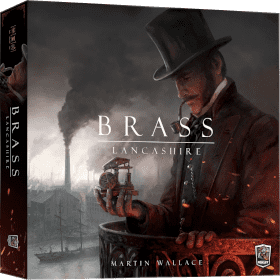 Brass: Lancashire — publicat inițial ca Brass — este un joc de strategie economică ce spune povestea antreprenorilor din bumbac care concurează în Lancashire în timpul revoluției industriale. Trebuie să dezvolți, să construiești și să-ți stabilești industriile și rețeaua, astfel încât să profiți de cererea de fier, cărbune și bumbac. Jocul se desfășoară în două jumătăți: faza canalelor și faza feroviară. Pentru a câștiga jocul, obține cele mai multe puncte de victorie (VP), care se numără la sfârșitul fiecărei faze. Punctele de victorie se obțin din canalele, șinele și cartonașele de industrie stabilite (întoarse). În fiecare rundă, jucătorii joacă pe rând conform pistei ordinii de joc, primind două acțiuni pentru a efectua oricare dintre următoarele: construiește un cartonaș de industrie, construiește o șină sau un canal, dezvoltă o industrie, vinde bumbac, ia un împrumut
La sfârșitul turei tale, înlocuiești cele două cărți pe care le-ai jucat cu alte două din pachet. Ordinea de joc este determinată de câți bani a cheltuit un jucător în tura anterioară, cel care a cheltuit cel mai puțin jucând primul. Acest mecanism al ordinii de joc deschide opțiuni strategice pentru jucătorii care joacă mai târziu în ordinea de joc, permițând posibilitatea unor ture consecutive.
După ce toate cărțile au fost jucate pentru prima dată (cu dimensiunea pachetului ajustată în funcție de numărul de jucători), faza canalelor se încheie și începe o rundă de punctare. După punctare, toate canalele și toate industriile de cel mai scăzut nivel sunt eliminate din joc, după care se împart cărți noi și începe faza feroviară. În această fază, jucătorii pot ocupa acum mai mult de o locație într-un oraș, iar construirea de conexiuni duble (deși costisitoare) este posibilă. La sfârșitul fazei feroviare, are loc o altă rundă de punctare, apoi se desemnează un câștigător.
Cărțile limitează locurile în care îți poți construi industriile, vinde bumbac sau construi conexiuni (deși orice carte poate fi folosită pentru a dezvolta). Acest lucru duce la o gestionare strategică a momentului și a rezervei de cărți. Resursele sunt comune, astfel încât, dacă construiești o linie feroviară (care necesită cărbune), trebuie să folosești cărbunele de la cea mai apropiată sursă, care poate fi mina de cărbune a unui adversar, iar aceasta aduce la rândul ei acea mină mai aproape de punctare (adică de a fi utilizată).
Numărul de jucători: 2 - 4
Durata jocului: 68 mn
Complexitate: 3 / 5
Joacă Brass: Lancashire și 1421 alte jocuri online.
Nu trebuie descărcat nimic - joacă direct în motorul de căutare.
Cu prietenii tăi și mii de jucători din toate lumea.
Gratuit.


Joacă Brass: Lancashire și 1421 alte jocuri online.
Nu trebuie descărcat nimic - joacă direct în motorul de căutare.
Cu prietenii tăi și mii de jucători din toate lumea.
Gratuit.
Rezumatul regulamentului
Core Turn Structure On your turn, you must perform exactly 2 actions (Exception: Everyone only takes 1 action during the very first round of the game). For every action you take, you must discard exactly 1 card from your hand. Turn order for the next round is determined by how much money you spend in the current round. The player who spends the least goes first; the player who spends the most goes last.
The 5 Actions You may perform any combination of the following actions, including taking the same action twice:
1. Build: Place an industry tile on the board.
Location Card: Build any industry in the matching city (does not need to be connected to your network).
Industry Card: Build the matching industry in any city that is part of your established network.
Cost: You must pay the money on the tile, plus any required Coal or Iron.
2. Network: Expand your connections.
Canal Era: Place 1 canal for £3.
Rail Era: Place 1 rail for £5 + 1 Coal, OR place 2 rails for £15 + 2 Coal.
Rule: New links must connect to a location already in your network.
3. Develop: Discard 1 or 2 of the lowest-level industry tiles from your player board to access higher-level, more profitable tiles.
Cost: 1 Iron per tile removed.
4. Sell: Flip your un-flipped Cotton Mills to increase your income and prepare them for scoring.
Must be connected to an un-flipped Port (yours or an opponent's) OR connected to the Distant Market.
You can sell from multiple mills in a single action.
5. Loan: Take an immediate cash injection of £10, £20, or £30 from the bank.
Penalty: Your income track drops by 1, 2, or 3 color-band levels.
Restriction: You cannot take loans during the final 4 rounds of the Rail Era.
The Golden Rule of Resources - Understanding how resources move is the key to winning Brass:
1. Coal needs a path: To use Coal, your build site must be physically connected (via any player's canals/rails) to an unexhausted Coal Mine or a Port with a trade icon. You must always consume the closest available coal.
2. Iron teleports: Iron does not require network connections. You can use Iron from any unexhausted Iron Works on the board, regardless of where it is.
3. If no resources are on the board, you may buy them from the global market, provided you have the required network connection for Coal (Iron can always be bought from the market).
Era Transition & Scoring - Scoring occurs at the end of both the Canal Era and the Rail Era.
Network Links: Score 1 VP for every gold link symbol on the two location tiles connected to your canal/rail.
Flipped Industries: Score the VP value printed on all of your flipped industry tiles.
Between Eras:
1. All Level 1 industry tiles are permanently removed from the board.
2. All Canal links are removed.
3. Level 2+ industries remain on the board and will score again at the end of the Rail Era.
BGA-Specific Tips for Playing
Undo is your friend: Brass is a highly calculable game. Use the "Undo" button on BGA to test a sequence of actions (especially double-rail placements or double-develops) to ensure you have exactly enough money and resources before committing.